Introduction
This lab looked simple at first: a classic reflected XSS.
The twist was Content Security Policy (CSP). My goal wasn’t just to inject JavaScript, but to actually execute it despite CSP.
The challenge forced me to stop thinking in “payloads” and start thinking in execution paths.
Reconnaissance
I started by browsing the application normally and watching how user input was handled.
I quickly noticed a name parameter reflected directly into the page:
/?name=hackerThat’s always my first stop.
Naturally, I tried a basic XSS payload:
<script>alert(1)</script>The script tag appeared in the page source, but nothing executed.
That was my first signal to check the response headers.
The CSP header stood out immediately:
Content-Security-Policy:
default-src 'self';
script-src 'self' https://redacted.com
So inline scripts were blocked, but scripts hosted on the same origin were allowed.
That changed the approach completely.
Exploitation
Since I couldn’t run inline JavaScript, I needed a JavaScript file on the same domain that I could control.
I started enumerating routes and found this endpoint:
/js/countdown.php?end=2534926825When I opened it directly, it returned raw JavaScript.
Even better: the end parameter was injected straight into the JS logic without sanitization.
At that point, the plan was clear:
-
Inject JavaScript into
countdown.php -
Load that file via
<script src=""> -
Let CSP do the rest for me
I crafted a payload that:
-
Closed the original JavaScript expression
-
Executed my own
alert -
Commented out the rest to avoid syntax errors
Final payload (URL-encoded in the browser):
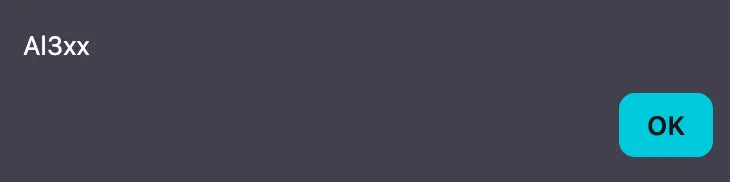
<script src="/js/countdown.php?end=2*1); alert('Al3xx'); //"></script>When the page loaded, the alert popped instantly.